
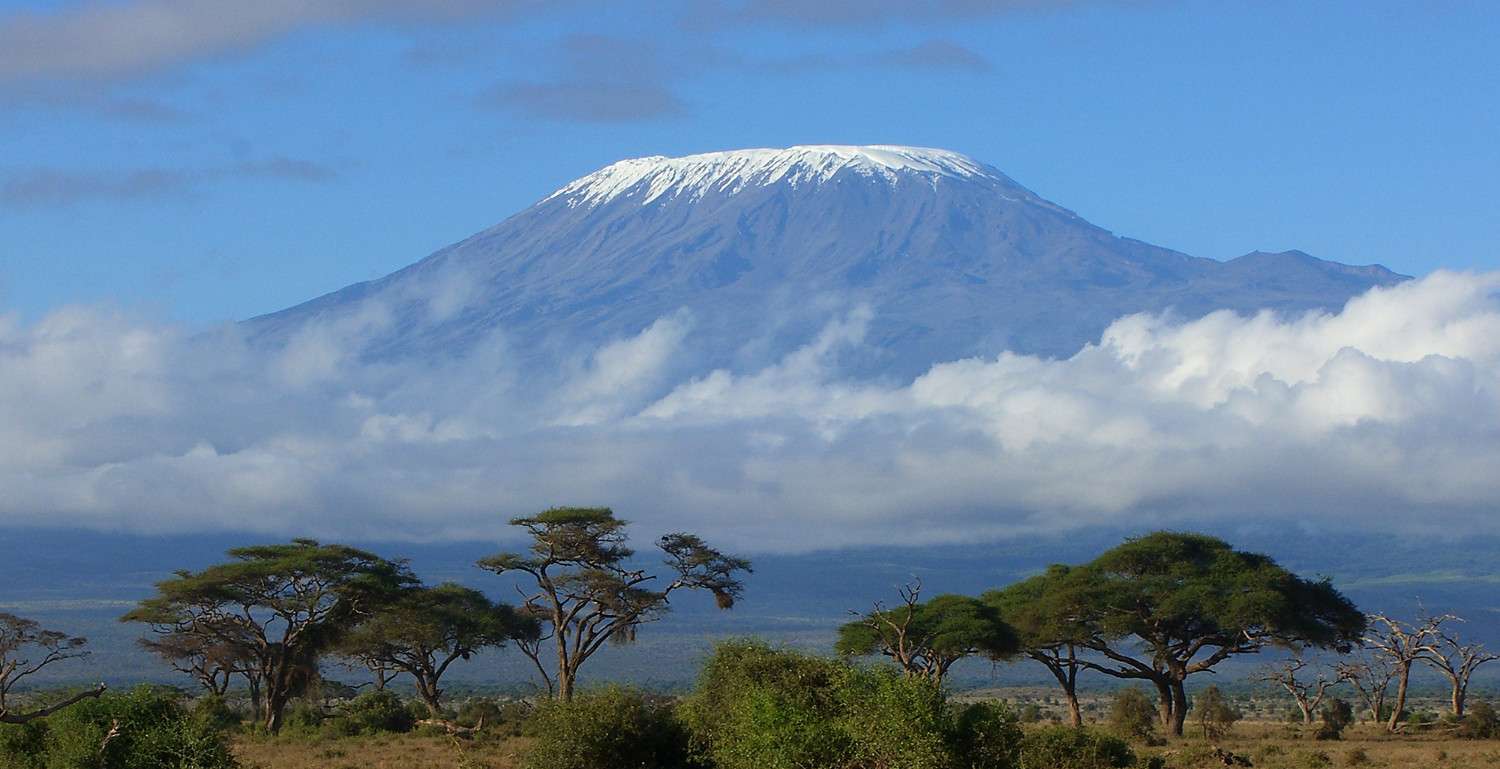
Ask most people to name a mountain in Tanzania and you’ll get one answer. Mount Meru, rising within Arusha National Park barely an hour from the city that shares its name, is the country’s second-highest peak and one of its most overlooked trekking destinations — overshadowed, understandably, by its far more famous neighbour on the horizon.
What makes Meru distinctive
Meru is a dramatic mountain in its own right: an active (though currently dormant) stratovolcano with a horseshoe-shaped crater created by a historic eruption that collapsed its eastern flank. The approach trek passes through genuinely varied terrain — montane forest home to buffalo, giraffe and colobus monkeys within Arusha National Park’s boundaries, then open moorland and finally a rocky summit ridge with dramatic exposure on both sides near the top.
How it compares to Kilimanjaro
Meru is shorter (typically climbed over 3 – 4 days versus 5 – 9 for Kilimanjaro), lower in absolute altitude, and requires a steeper, more physically demanding final summit push relative to its overall length. It sees a fraction of Kilimanjaro’s visitor numbers, giving it a genuinely quieter, wilder feel. Unlike most of Kilimanjaro’s lower slopes, Meru’s approach passes directly through wildlife habitat, meaning an armed ranger typically accompanies the early stages of the trek — a genuinely different experience from Kilimanjaro’s non-wildlife trekking zones.
Why some climbers use it before Kilimanjaro
Because Meru’s summit sits at a genuinely high altitude in its own right, spending a few days on it in the lead-up to a Kilimanjaro climb can offer some pre-acclimatisation benefit, in addition to being a rewarding trek in its own right rather than merely a warm-up exercise. This shouldn’t be treated as a substitute for choosing an appropriately paced Kilimanjaro route — see Kilimanjaro Altitude Sickness for why gradual ascent on the main climb still matters regardless.
Who Meru suits
Meru is a strong option for travellers who want a genuine multi-day trekking challenge without the time, cost, or crowds of Kilimanjaro; for those specifically seeking pre-acclimatisation before a Kilimanjaro attempt; or for travellers who have already climbed Kilimanjaro and want a different, less-visited mountain experience in the same region.
Frequently Asked Questions
Is Mount Meru harder than Kilimanjaro?
Not overall — Meru is shorter and lower — but its final summit push is notably steep and exposed relative to its length, which some climbers find more physically demanding in that specific section than equivalent stretches of Kilimanjaro.
Do I need a permit to climb Mount Meru?
Yes — Meru lies within Arusha National Park, managed by TANAPA, and requires park fees and a licensed guide, similar in structure to Kilimanjaro’s permit system though administered separately.
Can I see wildlife while climbing Mount Meru?
Yes — the lower slopes pass through Arusha National Park’s forest and savanna zones, home to buffalo, giraffe and various primates, which is part of what makes the approach distinctive compared to Kilimanjaro.
Should I climb Meru before attempting Kilimanjaro?
Some climbers do, for the trekking experience itself and a possible modest acclimatisation benefit, though it’s not a requirement and shouldn’t replace proper route and pacing choices on the Kilimanjaro climb itself.
How long does climbing Mount Meru take?
Typically 3 – 4 days, considerably shorter than a standard Kilimanjaro itinerary.
Curious whether Mount Meru fits into your Tanzania itinerary, alongside or instead of Kilimanjaro? Get in touch or request a tailored quote to talk it through.