
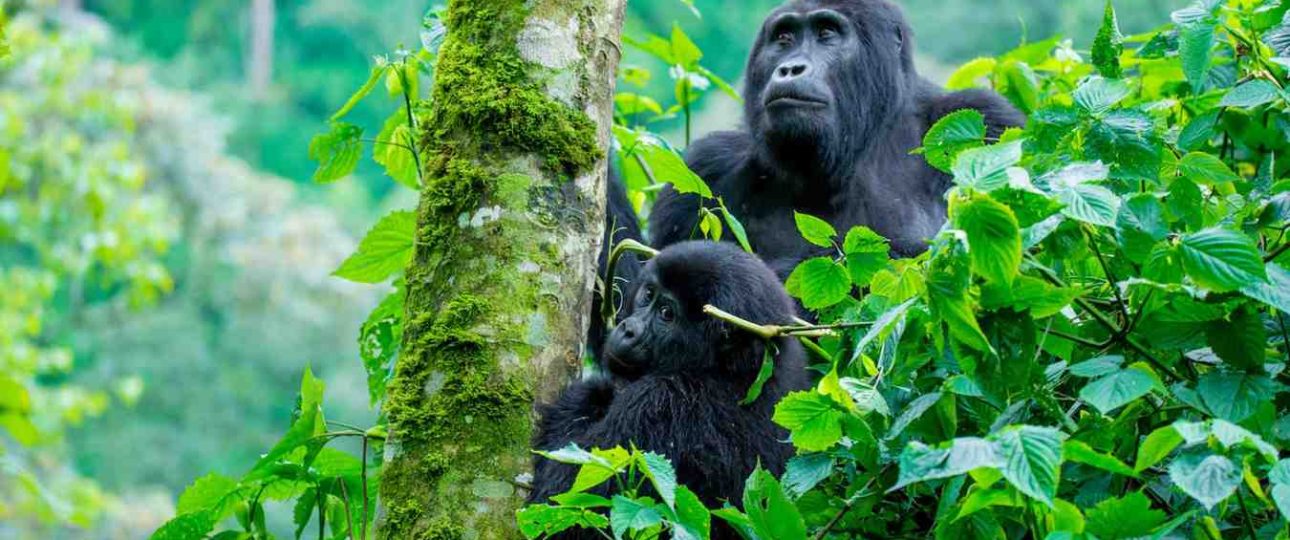
Rwanda and Uganda are the two most established mountain gorilla trekking destinations in the world, both offering genuinely life-changing wildlife encounters, and both are frequently compared against each other by travellers trying to decide where to spend what is, for most people, a significant one-time investment. The honest answer is that both are excellent; the more useful answer is how they actually differ.
Permit cost — confirm the current tariffs
Permit tariffs differ between Rwanda and Uganda and can materially affect the overall trip cost. Because both authorities can revise rates and eligibility categories, compare the current Rwanda Development Board and Uganda Wildlife Authority tariffs for your travel dates before making a decision. This guide therefore does not present an expired or unverified price as a current booking figure.
Trek difficulty and terrain
Rwanda’s Volcanoes National Park treks generally involve steep volcanic terrain at higher base altitude, which can make the trek itself more physically demanding regardless of how far you actually walk to reach a gorilla family. Uganda’s Bwindi treks take place in dense, often muddy rainforest at somewhat lower altitude, with trek duration and difficulty varying considerably by which specific gorilla family you’re assigned to track that day — some treks are short, others considerably longer, and this isn’t something you control in advance.
Access and combinability
Rwanda’s Volcanoes National Park is close to Kigali, making for relatively short transfer times and a compact itinerary — genuinely convenient if gorilla trekking is your primary focus with limited time. Uganda’s Bwindi is more remote from Kampala/Entebbe, generally requiring either a longer road transfer or a domestic flight, but Uganda offers a wider variety of other wildlife and primate experiences within the same country, including chimpanzee trekking and savanna parks, making it a stronger fit for a longer, more varied Uganda-focused itinerary.
A simplified comparison
| Rwanda (Volcanoes NP) | Uganda (Bwindi/Mgahinga) | |
|---|---|---|
| Permit tariff | Confirm with RDB | Confirm with UWA |
| Terrain | Steep volcanic slopes | Dense rainforest, variable difficulty |
| Access from capital | Relatively short | Longer, often requiring a domestic flight |
| Natural itinerary pairing | Compact, focused trip | Wider Uganda wildlife circuit |
How to actually decide
If cost is a deciding factor, compare the authorities’ current tariffs alongside the wider itinerary cost before choosing. If time is limited and you want the most compact possible itinerary, Rwanda’s proximity to Kigali is a genuine advantage. If you’re planning a longer trip and want to combine gorilla trekking with a wider range of wildlife experiences in one country, Uganda’s broader park network is worth weighing. Neither choice is a compromise — both put you in front of habituated mountain gorilla families with trained trackers and armed ranger escorts, which is the core of the experience either way.
Frequently Asked Questions
Is Rwanda or Uganda cheaper for gorilla trekking?
Permit tariffs and eligibility categories can change. Compare the current rates published by the Rwanda Development Board and Uganda Wildlife Authority for your dates rather than relying on an undated comparison.
Which country has an easier trek?
Neither is uniformly “easier” — Rwanda’s terrain is generally steeper, while Uganda’s difficulty varies considerably by which gorilla family you’re assigned to track on a given day.
Can I visit both countries’ gorilla populations in one trip?
Some travellers do combine Rwanda and Uganda gorilla trekking in a longer, multi-country itinerary — see our multi-country East Africa guide for how this is typically planned.
How far in advance do I need to book a gorilla permit?
Given limited daily permit numbers in both countries, several months’ advance booking is generally recommended, and sometimes required during popular periods.
Is gorilla trekking physically demanding?
Yes, to varying degrees — treks can involve steep or muddy terrain and variable duration depending on where the gorilla family is located that day. Reasonable fitness is expected, and porters are available to assist with equipment in both countries.
Deciding between Rwanda and Uganda for gorilla trekking? Our team can talk through cost, timing and how it fits into a wider itinerary. Request a tailored quote or get in touch.