
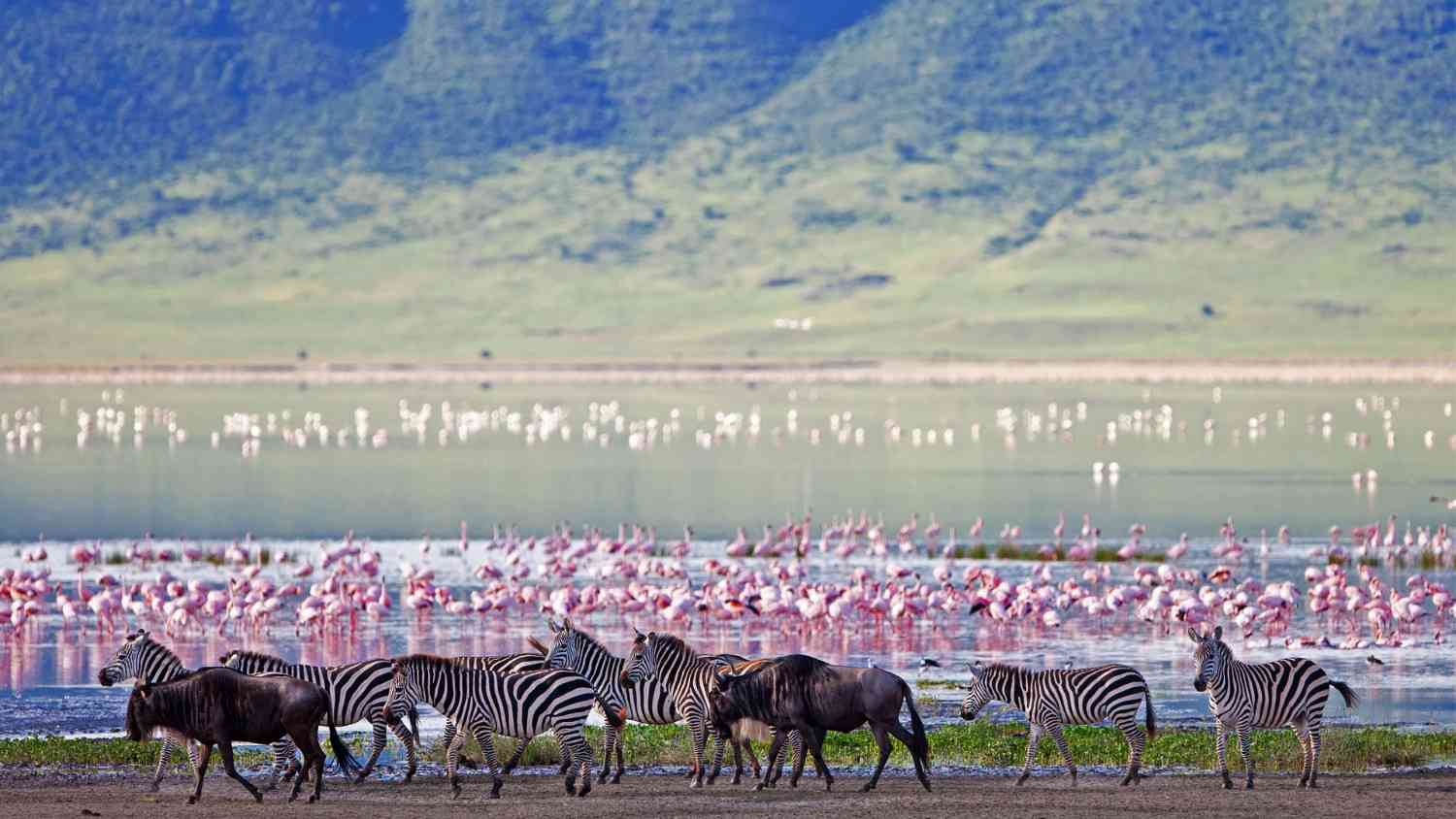
Most safari itineraries are built around mammals, understandably — but East Africa’s bird diversity is extraordinary in its own right, and travellers who build even a portion of their trip around it tend to come away having noticed a whole layer of the ecosystem that a purely mammal-focused visit can miss.
Why East Africa specifically
The region sits at the crossing point of several distinct habitat types — savanna, montane forest, wetland, rift valley lake systems — which between them support several hundred species across a typical multi-country itinerary. You don’t need to be a dedicated birder to appreciate this; even a general wildlife traveller tends to notice more birds once a guide starts pointing them out deliberately.
Where birding is genuinely strong
Lake Manyara National Park (Tanzania). The lake and its groundwater forest support a notably dense concentration of species in a relatively compact area, making it a practical add-on to a wider northern circuit itinerary. See our Lake Manyara page for the fuller picture of the park.
Tanzania’s broader circuit. Beyond Manyara, most of Tanzania’s parks offer strong incidental birding alongside mammal viewing — raptors over the Serengeti plains, water birds around Ngorongoro’s crater floor, and forest species in areas like the Usambara foothills near Arusha.
Uganda. Widely regarded as one of Africa’s strongest birding countries generally, thanks to its position spanning savanna and dense Albertine Rift forest — a genuine complement to gorilla and chimpanzee trekking rather than a separate trip.
Rwanda. Volcanoes National Park’s montane forest and Nyungwe Forest further south both offer strong forest birding, often combined with gorilla trekking itineraries for travellers extending their time in the country.
How to build it into a trip without derailing your itinerary
You don’t need a dedicated birding-only trip to benefit from this. Mentioning an interest in birds to your guide at the start of a game drive is often enough — most safari guides are genuinely knowledgeable about bird species and will point them out naturally alongside mammal sightings. For travellers who want birding to be a more deliberate focus, slightly slower-paced days with more stops, rather than a fundamentally different itinerary, usually achieve this.
Frequently Asked Questions
Do I need specialist equipment for birdwatching on safari?
A decent pair of binoculars is genuinely useful and worth packing, but no other special equipment is required — your guide’s knowledge matters more than gear.
Is there a best season for birding in East Africa?
Resident species are visible year-round; the presence of Palearctic migrants (birds wintering from Europe and Asia) adds additional species during roughly the northern hemisphere winter months, which is worth factoring in if migratory species are a priority.
Can birding be combined with gorilla trekking in Rwanda or Uganda?
Yes — both countries’ forest habitats support strong birding, and it’s a natural complement to a trekking-focused itinerary rather than a separate trip. See our multi-country itinerary guide for how this kind of combination is typically planned.
Is Tanzania or Uganda better for birding specifically?
Uganda is generally considered the stronger dedicated birding destination given its habitat diversity, but Tanzania offers excellent incidental birding alongside a stronger overall mammal safari — the right choice depends on how central birding is to your priorities.
Do I need a specialist birding guide, or will a general safari guide work?
General safari guides are typically knowledgeable enough for most travellers’ interest level; dedicated specialist birding guides exist for travellers with more advanced or list-focused interests and can be arranged where genuinely warranted.
Want to build birding into a wider safari or gorilla-trekking itinerary? Our team can help shape the pacing around it. Get in touch or request a tailored quote.